Cloud effect on PAR
September 20, 2026
If you don’t have a meter, but pay attention to your shadow, clouds, and the sun location, you can get a reasonable estimate of photosynthetically active radiation. First, three terms:
PAR is photosynthetically active radiation
PPFD is photosynthetic photon flux density, the instantaneous quantity of photosynthetic radiation reaching the turf surface in a single second
DLI is daily light integral, the total amount of PAR in one day from sunrise until sunset, obtained by summing the PPFD values from each second during the day
You won’t always be carrying a quantum meter around with you. I did for a few years, and made a lot of measurements in various conditions, and here’s the simple rule of thumb I came up with to get a surprisingly good estimate of how much PAR the grass is receiving.
-
If there are no clouds, or there are no clouds between you and the sun, then you can expect the cloud shade to be negligible, and the PAR should be close to the maximum possible.
-
If you can see your shadow, but there are clouds between you and the sun, then expect the PAR to be reduced by about 25%.
-
If the clouds block so much light that you cannot see your shadow, but you can still tell which part of the sky the sun is in, expect the PAR to be reduced by about 50%.
-
If you cannot see your shadow, and at the same time the clouds are so thick that you cannot tell where the sun is in the sky, then expect the PAR to be reduced by about 75%.
For more about this topic, see:
- Our “Dealing with shade” update
- Average and potential DLI and PPFD at your location from the climate appraisal on your weather page
- “A rule of thumb for cloud effect on PAR” on the ATC website
- This PPFD app calculates the maximum possible (full sun PPFD and DLI) for any location.
Let’s look at a few photos to illustrate this. I took all these photos during the 2018 U.S. Amateur Championship at Pebble Beach Golf Links, when there was a mix of sun and clouds.
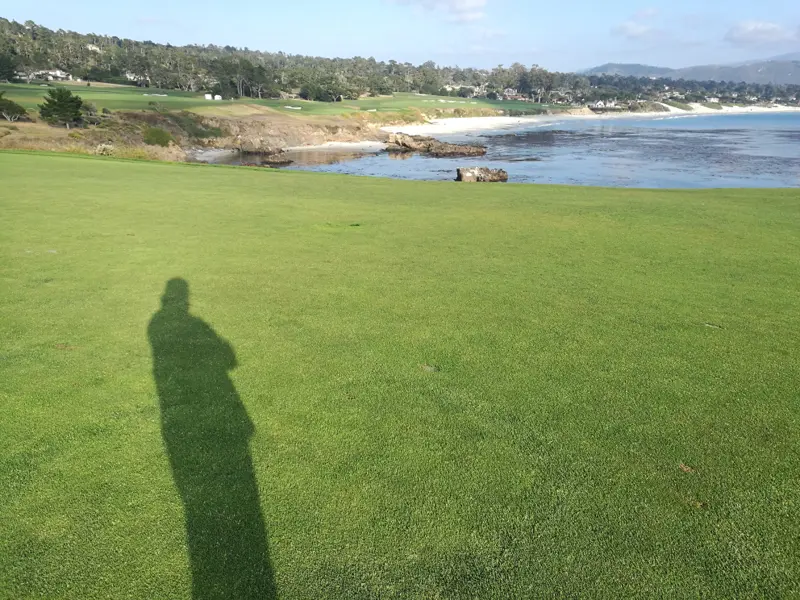
100% PPFD: no clouds between the sun and grass
The easiest one is full sun. You’ll see your shadow, and PPFD is at 100% of what it can be at that second, based on your latitude and the day of the year.
75% PPFD: clouds between the sun and grass, but shadows visible

If you are able to see you shadow, but there are clouds between the sun and the turf, that is about a 25% reduction in PPFD. The clouds reflect and scatter the light, so what reaches the turf is less than the amount in full sun.
50% PPFD: cloudy enough to hide shadows, but able to find general sun location
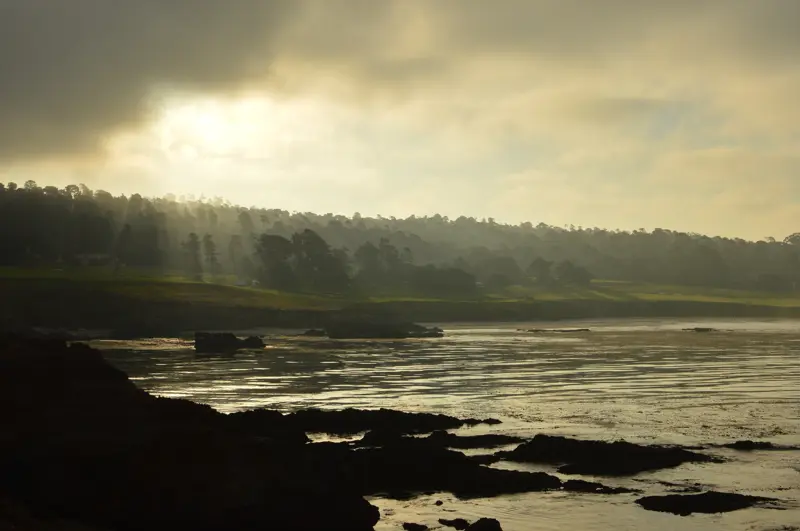
I was standing near 8 tee at Pebble Beach one August morning and saw some beautiful light on the trees. I took that photo, then 16 seconds later took the photo below of the 7th green.
When the clouds are thick enough so that shadows are invisible, but you can still tell which direction in the sky the sun is, that’s about a 50% reduction in PPFD.
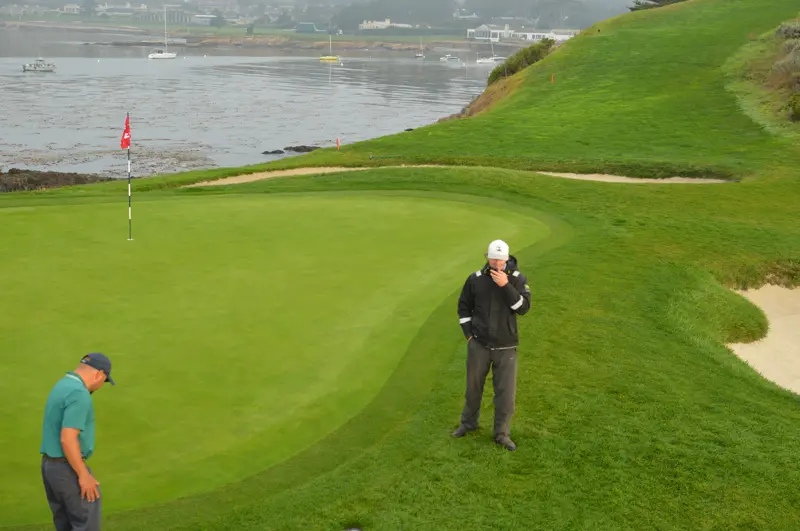
25% PPFD: clouds hide shadows and impossible to find sun location in sky
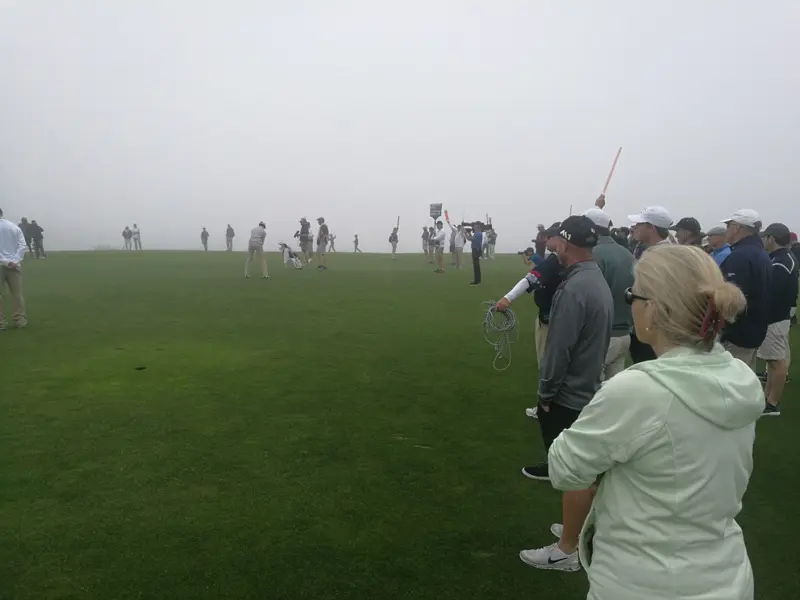
Then there are the really cloudy conditions when you look up and can’t tell if the sun is to your left, right, directly overhead, or behind you. When the clouds are this thick, they are blocking about 75% of the PAR, and PPFD will be about 25% of its potential.