Species and disease
I’ve visited golf courses during seasons with high snow mold (specifically Microdochium nivale) pressure, and some of these courses apply no fungicides, or almost no fungicides, yet have practically no snow mold. How is this possible? After participating in the Tour de Fungus a couple times, along with winter visits to other courses successfully managing this disease, a few things stick in my mind.
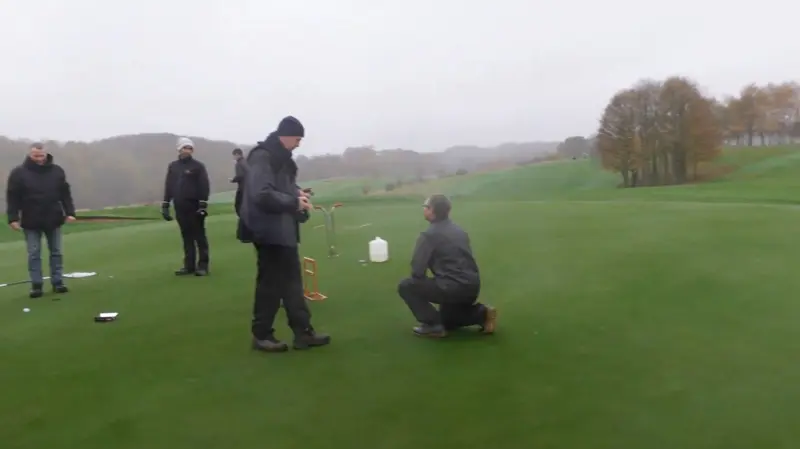
- there’s not much Poa annua on those greens. It may be a multi-year process to reduce the Poa population and increase the percentage of other species in the sward, but when that is accomplished, there’s less disease.
- the greens are not getting a lot of disturbance—no cultivation of any type—in the autumn and winter. Martin Nilsson explained, in the Tour de Fungus video below, that preparing the turf for winter started for him in August. That means being careful not to cultivate, and preparing for winter means reducing the nutrient supply to the grass, which leads to the next item
- growth rate is controlled, mowing is infrequent, rolling is common, and the grass is not growing much. If the leaf blades are not wounded by mowing, if the sward is not disturbed by verticutting or solid-tining or sand topdressing, the disease symptoms seem to be greatly reduced.
There’s also a discussion, and clear images showing the disease susceptibility, in my winter visit to Sunshine Coast video with Jason Haines.